

By Publisher Ray Carmen
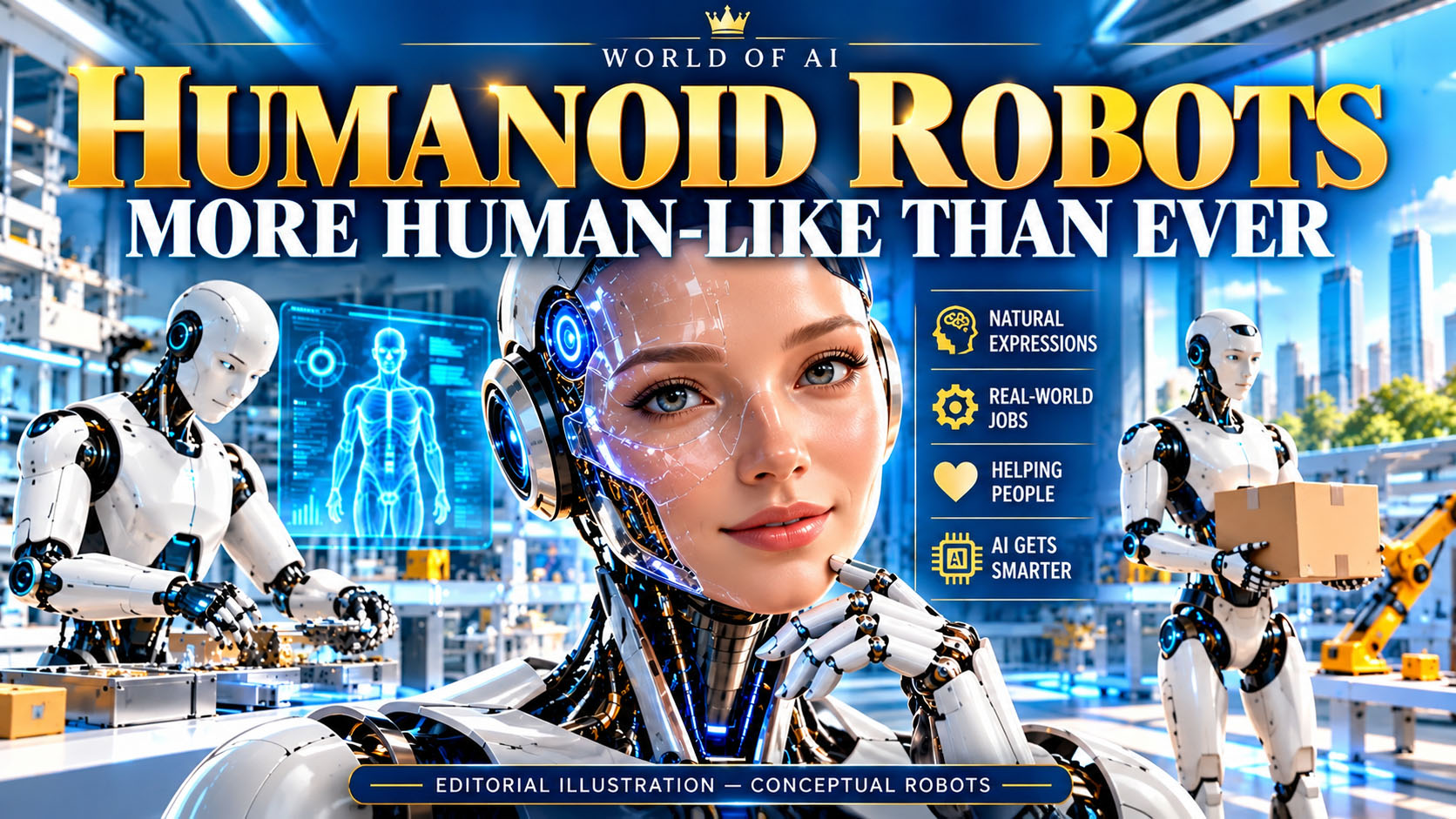
They walk, talk, recognise objects, carry goods and increasingly perform real-world jobs. But as artificial intelligence gives robots greater physical abilities, an extraordinary question emerges: how close are we to creating machines that can work alongside humans?
THE ROBOT REVOLUTION HAS BEGUN
Imagine entering a hotel and being greeted by a humanoid robot.
It welcomes you, answers your questions and directs you towards your room.
At a nearby hospital, another machine transports medical supplies.
In a factory, robots carefully position components on a production line.
And inside a warehouse, a mechanical worker lifts packages and carries them to their destinations.
Not long ago, these scenes belonged largely to science fiction.
Today, parts of that vision are becoming reality.
Across the world, scientists, engineers and technology companies are developing increasingly sophisticated humanoid robots.
These machines combine artificial intelligence, cameras, sensors, motors and advanced control systems to perform tasks once considered possible only for humans.
Their appearance may resemble ours.
But their most important transformation is happening inside their electronic brains.
WHAT EXACTLY IS A HUMANOID ROBOT?
A humanoid robot is a machine designed with some of the physical characteristics of a human being.
Many have heads, torsos, arms, hands and legs.
Others use wheels or alternative mechanisms for movement.
Their human-like structure offers a practical advantage.
Buildings, factories, tools and workplaces have largely been designed around the human body.
A capable humanoid robot may therefore be able to work in existing environments without requiring every building or workstation to be redesigned.
The challenge is enormous.
Walking on two legs requires continuous balance.
Picking up an unfamiliar object demands accurate vision, grip control and coordination.
Moving safely among people requires reliable detection of obstacles and unexpected events.
And understanding a spoken instruction is very different from successfully carrying it out.
Modern artificial intelligence is helping engineers address these challenges.
ROBOTS ARE BEGINNING TO LOOK MORE HUMAN
One of the most fascinating developments involves facial expressions and social interaction.
Researchers are creating robotic faces capable of producing movements resembling smiles, surprise and other familiar expressions.
Advanced cameras can track faces, recognise objects and interpret aspects of human movement.
Speech-recognition systems allow robots to respond to spoken instructions.
Artificial intelligence can generate increasingly natural conversations.
The result can be astonishing.
A robot may appear attentive, friendly or even thoughtful.
But there is an important distinction.
A convincing human-like expression does not establish that a robot possesses human emotions, consciousness or understanding.
Today’s machines can simulate aspects of social interaction without necessarily experiencing the feelings they appear to express.
Nevertheless, their growing sophistication raises important questions about how humans will interact with intelligent machines.
FROM SCIENCE FICTION TO THE FACTORY FLOOR
The most significant progress may be occurring not in entertainment but in manufacturing.
Automotive manufacturers are testing humanoid robots for repetitive and physically demanding tasks.
At BMW’s Spartanburg plant in South Carolina, the Figure 02 humanoid robot participated in a production pilot.
According to BMW, the robot handled more than 90,000 components over approximately 1,250 operating hours, supporting production of more than 30,000 BMW X3 vehicles.
The company subsequently expanded its investigations into humanoid robotics at its Leipzig plant in Germany.
There, the AEON robot has been tested for applications involving battery assembly and component manufacturing.
These are important developments because they move humanoid robotics beyond controlled demonstrations.
The real test is whether a machine can perform useful work reliably, safely and economically over extended periods.
THE GLOBAL RACE TO BUILD INTELLIGENT MACHINES
Several countries are investing heavily in humanoid robotics.
United States
American technology developers are advancing robotic movement, artificial intelligence and industrial automation.
Boston Dynamics has developed its electric Atlas humanoid robot for industrial applications.
Figure AI is working on robots capable of performing manufacturing and logistics tasks.
Tesla is developing its Optimus humanoid robot, with ambitions extending towards broader commercial applications.
China
China has emerged as a major centre of humanoid robotics development.
Companies are demonstrating increasingly capable machines designed for industrial work, research, logistics and public exhibitions.
China’s extensive electronics and manufacturing industries provide important advantages in motors, sensors, batteries and mechanical components.
Japan
Japan has a long history of robotics research.
Its scientists and manufacturers have contributed significantly to the development of human–robot interaction, industrial automation and assistive technologies.
Europe
European manufacturers and research institutions are combining robotics with advanced industrial engineering.
The growing interest in humanoid machines reflects the potential to address labour-intensive tasks and improve manufacturing flexibility.
The competition is no longer simply about producing the most impressive robot.
It is about creating machines that can perform useful work.
COULD ROBOTS HELP CARE FOR PEOPLE?
One of the most promising possibilities involves healthcare and assistance.
Robots may eventually help hospital staff transport supplies, move equipment and perform repetitive support tasks.
Assistive machines could also help older people and individuals with disabilities with selected daily activities.
In care settings, robots might support communication, reminders and practical assistance.
But such applications require particular caution.
Human care involves empathy, dignity, trust and professional judgement.
Robots must also meet demanding safety and reliability standards before they can be entrusted with physically assisting vulnerable people.
The most realistic near-term opportunity is not replacing nurses, doctors or carers.
It is developing machines that reduce their workload and allow them to spend more time with patients.
WILL HUMANOID ROBOTS TAKE OUR JOBS?
This is perhaps the most important question of all.
As robots become more capable, some tasks currently performed by people may become automated.
Manufacturing, warehousing, logistics and certain routine service activities are likely to experience growing technological change.
Supporters argue that robots could undertake dangerous, exhausting and repetitive work.
They may also help industries facing labour shortages.
Critics worry about job displacement, widening inequality and the concentration of economic power among companies controlling advanced automation.
Both concerns deserve serious consideration.
History shows that technological revolutions can eliminate certain occupations while creating others.
But the transition is rarely painless.
Workers may require retraining, new skills and access to different employment opportunities.
Governments and employers will face difficult decisions about how the benefits of automation should be shared.
THE INTELLIGENCE BEHIND THE MACHINE
A humanoid robot is far more than a mechanical body.
Its abilities depend upon sophisticated software.
Computer vision helps it interpret its surroundings.
Sensors provide information about movement, pressure and position.
Machine-learning systems can help robots recognise patterns and improve specific behaviours.
Advanced AI models may enable them to interpret instructions and plan sequences of actions.
Yet significant limitations remain.
A robot that successfully moves boxes in a controlled warehouse may struggle with an unfamiliar environment.
A machine that performs an impressive demonstration may not be able to repeat the task reliably for an entire working day.
Power consumption, battery life, maintenance, cost and safety remain substantial engineering challenges.
The most important advances will therefore be measured not simply by spectacular demonstrations, but by dependable everyday performance.
CAN ROBOTS EVER BECOME TRULY HUMAN?
The question is fascinating.
A robot might eventually possess an extraordinarily realistic face.
It may walk naturally, hold conversations and perform complex physical tasks.
But looking human is not the same as being human.
Scientists and philosophers continue to debate the nature of consciousness and whether artificial systems could ever possess subjective experience.
There is currently no established scientific basis for concluding that today’s humanoid robots experience emotions or consciousness in the way humans do.
The future may bring extraordinary advances.
But it would be premature to confuse increasingly sophisticated behaviour with human awareness.
THE WORLD OF AI — WHAT COMES NEXT?
The coming years will test whether humanoid robotics can move from impressive prototypes to widespread practical use.
The potential applications are considerable.
Robots could assist in factories, warehouses, laboratories and hazardous environments.
They might help inspect industrial facilities, support disaster-response teams or perform certain tasks in locations unsafe for people.
Some may eventually enter homes, hotels and public buildings.
But widespread adoption will depend on affordability, reliability, safety and public acceptance.
It will also require clear rules governing privacy, accountability and human oversight.
The challenge is not simply to create machines that resemble people.
It is to create machines that genuinely benefit them.
THE FINAL WORD
Humanity has spent centuries inventing tools to extend its physical abilities.
The wheel helped us move.
The steam engine transformed the industry.
Electricity changed civilisation.
Computers revolutionised information.
Artificial intelligence is now beginning to connect digital intelligence with physical machines.
The result could become one of the most important technological developments of the twenty-first century.
But the measure of success should not be how closely robots resemble humans.
It should be how effectively they improve human life.
THE FUTURE OF ROBOTICS IS NOT SIMPLY ABOUT MAKING MACHINES MORE HUMAN-LIKE.
IT IS ABOUT MAKING TECHNOLOGY MORE USEFUL TO HUMANITY.