
LORD BUDDHA — THE PRINCE WHO AWAKENED
By Publisher Ray Carmen
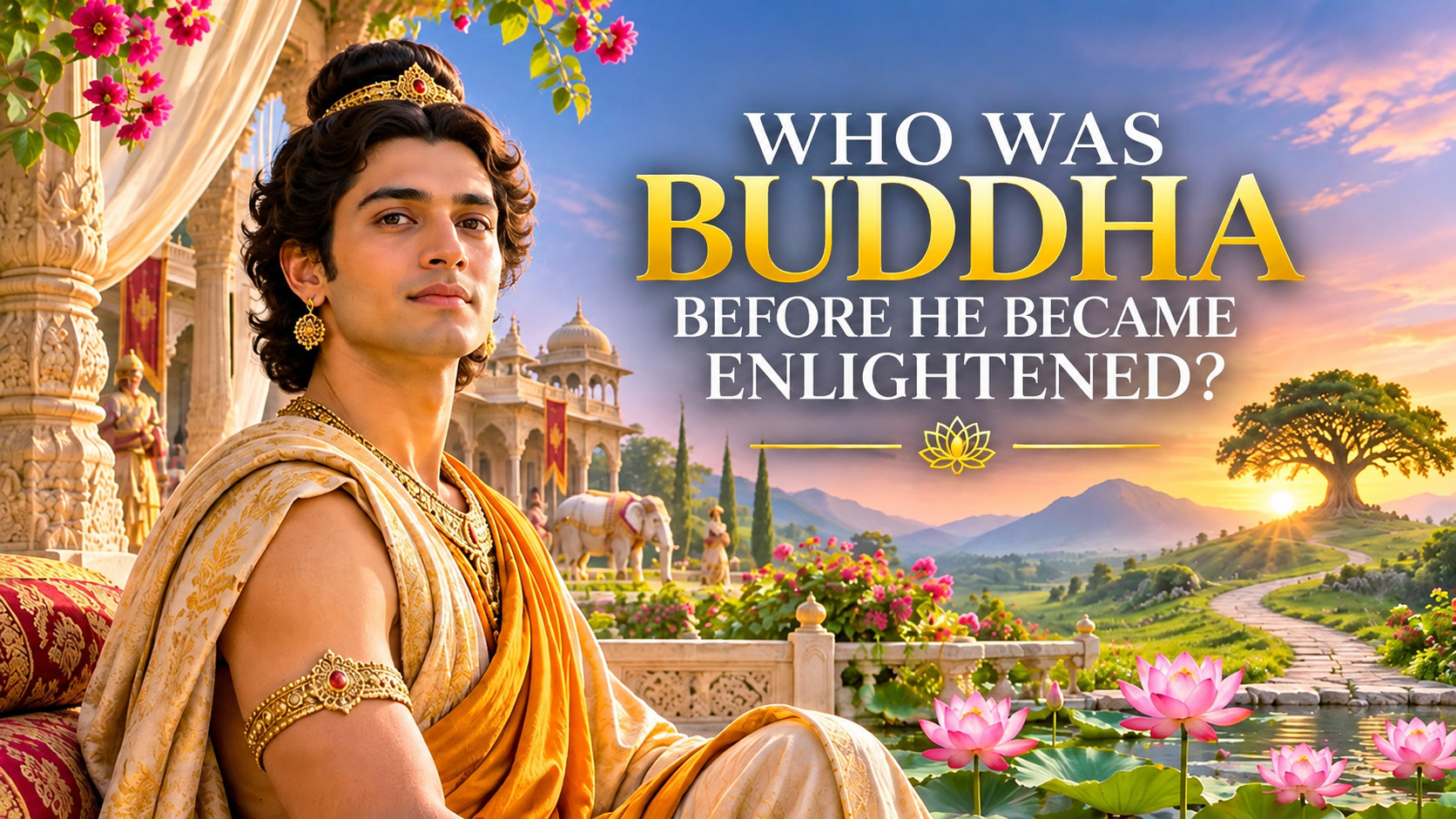
From the splendour of a royal palace to the wisdom of the Bodhi tree — the extraordinary spiritual journey of Siddhartha Gautama
More than 2,500 years ago, a young man raised among the privileges of royalty abandoned the comforts of his world to seek answers to humanity’s greatest questions. His journey would inspire one of the world’s most influential spiritual traditions.
THE PRINCE WHO HAD EVERYTHING — EXCEPT THE ANSWERS
There are lives that change a kingdom, and there are lives that change the human heart.
More than two thousand years ago, a young man born into the ruling Shakya clan in the Himalayan foothills stepped away from privilege, comfort and power in search of an answer to humanity’s deepest sorrow.
His name was Siddhartha Gautama.
The world would come to know him as the Buddha — the Awakened One.
According to Buddhist tradition, Siddhartha was born in Lumbini, in what is now Nepal, and grew up in the region of Kapilavastu.
His father, Suddhodana, was a leader of the Shakya people.
Traditional accounts describe a childhood surrounded by luxury, with his family hoping that he would become a great ruler.
Yet beneath the splendour of royal life, questions were waiting that no palace could answer.
THE FOUR SIGHTS THAT CHANGED HIS LIFE
Buddhist tradition tells of four encounters that transformed Siddhartha’s understanding of existence.
During journeys beyond the palace, he encountered an elderly person, someone suffering from illness and a dead body.
These experiences confronted him with the realities of ageing, sickness and death.
He then encountered a wandering holy man whose peaceful manner suggested that suffering might be met with wisdom rather than fear.
The encounters became known as the Four Sights.
For Siddhartha, they raised a question that wealth could not silence.
If everything we love must eventually change, where can lasting peace be found?
The young prince began to understand that material comfort could not protect anyone from the fundamental realities of human life.
THE NIGHT THE PRINCE WALKED AWAY
According to traditional accounts, Siddhartha eventually made an extraordinary decision.
He would leave behind his privileged life and devote himself to the search for spiritual understanding.
The departure became known as the Great Renunciation.
Tradition remembers that he left his wife, Yasodhara, and their young son, Rahula, to begin the life of a wandering seeker.
He exchanged fine garments for the simple clothing of a spiritual renunciant.
The man who had once lived among royal comforts now travelled in search of teachers, wisdom and liberation.
His ambition was no longer to rule a kingdom.
It was to understand suffering and discover whether humanity could overcome it.
THE SEARCH FOR TRUTH
Siddhartha studied with respected spiritual teachers and practised meditation.
He also embraced severe asceticism, denying himself food and physical comforts.
According to Buddhist accounts, his practices became so extreme that his body grew dangerously weak.
Yet suffering through deprivation did not bring the understanding he sought.
Eventually, Siddhartha recognised that neither indulgence nor self-torment offered the answer.
He began to follow a different approach.
The Middle Way.
This principle rejected both excessive attachment to pleasure and unnecessary physical suffering.
It would become one of the foundations of Buddhist teaching.
THE NIGHT BENEATH THE BODHI TREE
Strengthened by nourishment and determined to continue his search, Siddhartha travelled to the region now known as Bodh Gaya, in India’s Bihar state.
There, beneath a pipal tree, later revered as the Bodhi tree, he sat in meditation.
According to Buddhist tradition, he resolved to remain until he had discovered the truth about suffering and liberation.
The accounts describe a profound spiritual struggle.
Mara, representing temptation and the forces obstructing enlightenment, sought to disturb his concentration.
But Siddhartha remained steadfast.
Through meditation and insight, he came to understand the causes of suffering, the impermanent nature of existence and the possibility of liberation.
Buddhist tradition remembers this moment as his great awakening.
Siddhartha Gautama had become the Buddha.
The young man who had abandoned worldly privilege had discovered a spiritual path that would influence countless lives.
THE FOUR NOBLE TRUTHS
Following his enlightenment, the Buddha began sharing his teachings.
At the Deer Park in Sarnath, near Varanasi, he delivered what Buddhist tradition regards as his first sermon.
At the heart of his teaching were the Four Noble Truths.
They explain that suffering and dissatisfaction are features of conditioned existence; that craving and attachment contribute to suffering; that suffering can cease; and that there is a path leading towards liberation.
That path became known as the Noble Eightfold Path.
It brings together wisdom, ethical conduct and mental discipline through right understanding, intention, speech, action, livelihood, effort, mindfulness and concentration.
Rather than offering worldly riches or political power, the Buddha taught a path of personal transformation.
His message encouraged compassion, awareness and freedom from destructive attachment.
NIRVANA — THE FREEDOM BEYOND SUFFERING
One of Buddhism’s central concepts is Nirvana.
It is sometimes misunderstood as a distant heavenly destination.
In Buddhist teaching, Nirvana refers to liberation from greed, hatred and delusion — the forces that perpetuate suffering.
The Buddha’s enlightenment represented the attainment of this liberation during his lifetime.
Following his death, Buddhist traditions speak of his final Nirvana, or Parinirvana.
His teaching suggested that peace does not depend entirely upon changing the external world.
It also requires understanding the mind.
THE MESSAGE THAT CROSSED CONTINENTS
From its origins in ancient South Asia, Buddhism spread across vast regions of the world.
Its teachings travelled to Sri Lanka, Southeast Asia, China, Korea, Japan, Tibet and beyond.
Different cultures developed distinctive Buddhist traditions, temples, scriptures, artistic expressions and practices.
Today, Buddhism remains an important spiritual tradition across Asia and among communities throughout the world, including the Caribbean.
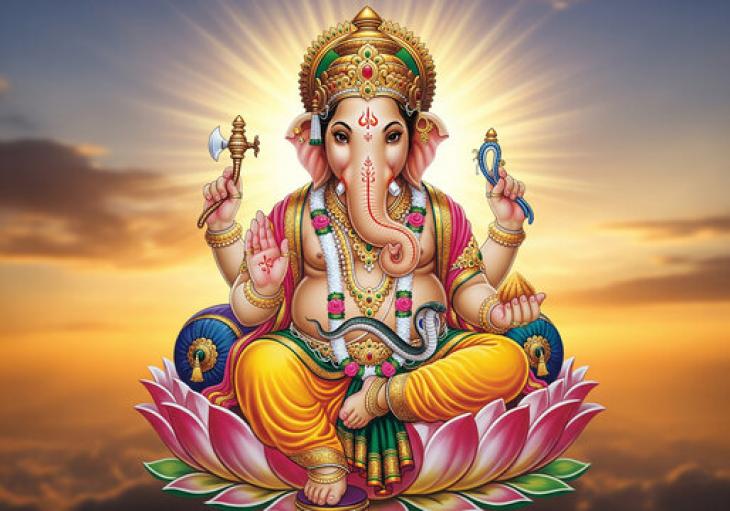
Within some Hindu traditions, the Buddha is also honoured as an avatar of Vishnu, although Buddhism developed as a distinct religious and philosophical tradition.
Across these different interpretations, the Buddha’s life continues to inspire reflection on compassion, wisdom and the human condition.
FROM ANCIENT INDIA TO THE CARIBBEAN
The Buddha’s teachings have travelled far beyond the region where they first emerged.
In the Caribbean, communities shaped by migration from South Asia have contributed to the region’s religious and cultural diversity.
Hindu and Buddhist traditions are distinct, but both form part of the wider spiritual history of South Asia.
Today, meditation, mindfulness and Buddhist philosophy also attract interest among people from many cultural backgrounds.
The Buddha’s emphasis on compassion and awareness continues to resonate with those seeking greater peace in their lives.
His story reminds us that spiritual ideas can cross geographical boundaries while retaining their historical roots.
THE PRINCE WHO CHANGED THE WORLD
The story of Siddhartha Gautama continues to fascinate humanity because it explores questions that remain relevant today.
What is happiness?
Why do human beings suffer?
Can wealth provide lasting fulfilment?
And is there a way to live with greater compassion and understanding?
The Buddha did not promise a life without change or loss.
His teachings offered a way to understand those experiences without being overwhelmed by attachment and fear.
His most enduring legacy is not a palace, a kingdom or a monument.
It is a body of spiritual teaching that has inspired generations.
More than two millennia after his lifetime, the story of the prince who became the Buddha continues to encourage people to examine their own lives.
He walked away from the riches of a kingdom — and began a spiritual journey whose influence would reach across the world.