

By Publisher Ray Carmen
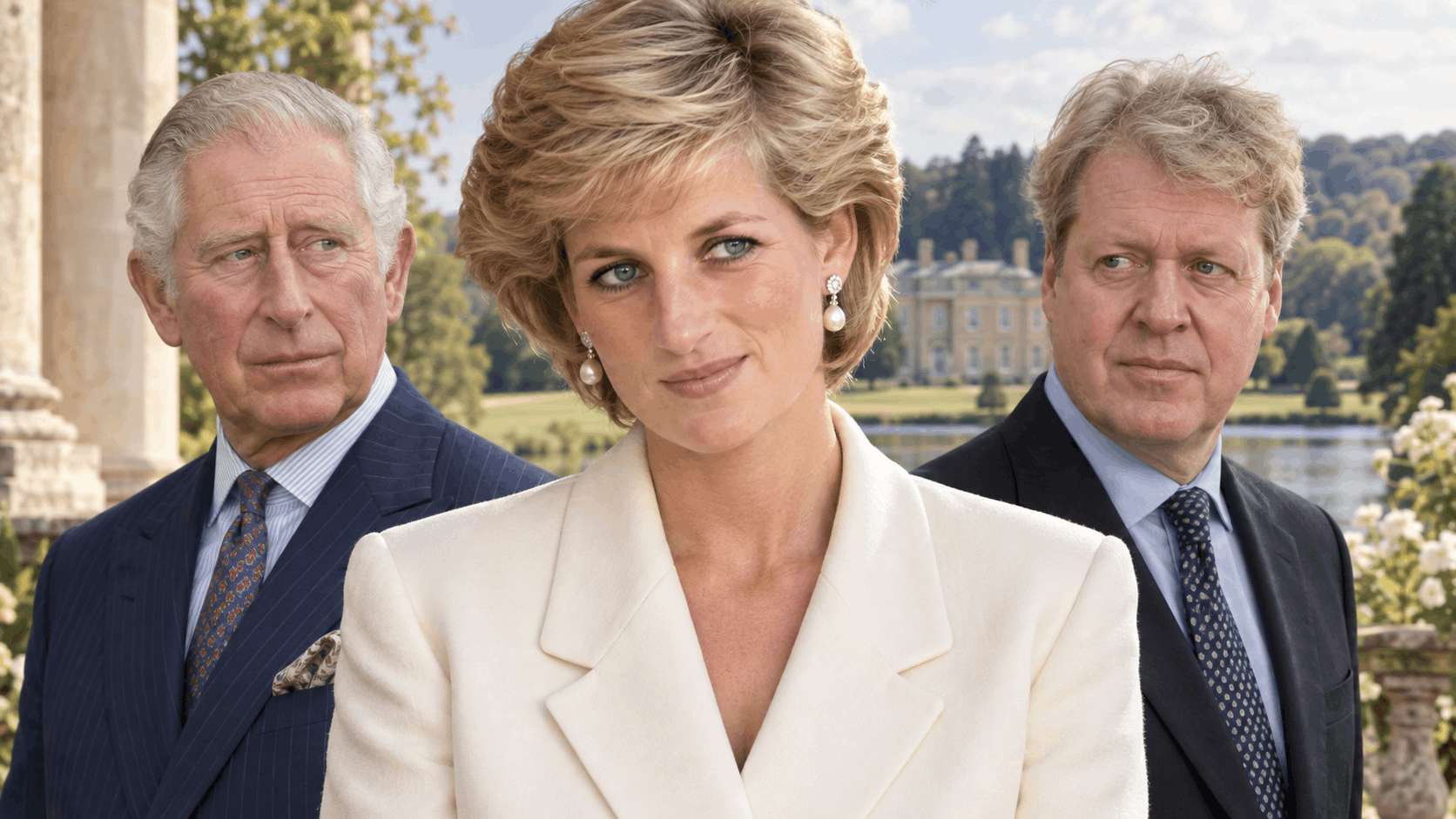
Nearly three decades after Princess Diana died, her memory has once again placed King Charles III and her brother, Earl Spencer, on opposite sides of a deeply personal public argument.
Earl Spencer says he remembers the words precisely. Buckingham Palace has issued a rare response challenging his recollection. At the centre of the controversy is Diana, whose life and death continue to command extraordinary public interest around the world.
THE ALLEGATION THAT REIGNITED THE ROYAL STORM
The dispute comes from Earl Spencer’s forthcoming memoir, Swan Song: Diana, My Sister.
In extracts published ahead of the book’s release, Spencer describes an angry telephone conversation with the then Prince Charles in the days following Diana’s death in Paris in August 1997.
Spencer says the argument concerned whether Princes William and Harry, then aged 15 and 12, should walk behind their mother’s coffin.
He alleges that during the exchange Charles told him words to the effect that Diana would soon be forgotten.
Spencer has subsequently stood by his recollection, saying he found the alleged comment so shocking that he discussed the conversation with friends and relatives at the time.
It is an extraordinary allegation — but it remains Earl Spencer’s account of a private conversation. No recording of the telephone call has been made public.
A RARE RESPONSE FROM BUCKINGHAM PALACE
Buckingham Palace did not allow the allegation to pass without comment.
Its response was unusually personal for an institution that normally avoids becoming involved in disputes surrounding royal memoirs.
The Palace suggested that the pain of losing a sibling can affect judgment and memory, effectively challenging Earl Spencer’s recollection without accusing him of deliberately inventing the conversation.
The intervention demonstrated how seriously the allegation was being treated.
Earl Spencer, however, has continued to defend his version of events.
THE FUNERAL PROCESSION AT THE HEART OF THE ROW
Diana’s funeral on 6 September 1997 produced one of the defining images of the modern Royal Family.
Princes William and Harry walked through London behind their mother’s coffin alongside their father, Prince Charles, their grandfather Prince Philip and their uncle Earl Spencer.
Spencer says he opposed the idea of the young princes being required to make such a public walk during an intensely traumatic moment.
The circumstances surrounding the decision have been discussed many times during the decades since Diana’s death, with differing recollections emerging from members of the family and those around them.
The procession nevertheless became one of the most enduring images of Diana’s funeral.
WHY DIANA STILL STANDS BETWEEN THEM
This argument is about far more than one sentence allegedly spoken during a telephone call.
It reaches back into the complicated history of Charles and Diana’s marriage, the Royal Family’s response to her death and the extraordinary public affection which surrounded the Princess of Wales.
For Earl Spencer, the memoir represents a brother telling the story of his sister from the perspective of the Spencer family.
For Buckingham Palace, some of those recollections are disputed.
And almost 30 years after Diana’s death, the intensity of the reaction demonstrates that memories of her remain extraordinarily powerful.
DIANA WAS NEVER FORGOTTEN
Whatever may ultimately be believed about the disputed telephone conversation, one thing is beyond dispute:
Diana was not forgotten.
Her humanitarian work, her willingness to display emotion publicly and her unconventional approach to royal life became part of the global memory of the late twentieth century.
Her death produced an unprecedented public reaction and became a defining moment for the modern monarchy.
The photographs, speeches, charitable causes and memories associated with Diana continue to fascinate generations who knew her — and increasingly those who were not even born when she died.
MEMORY, GRIEF AND HISTORY
The days immediately following Diana’s death were filled with grief, anger, fear and enormous public pressure.
More than one version of the same event can emerge when people remember moments experienced under extreme emotional circumstances.
That does not by itself establish that Earl Spencer’s recollection is wrong.
Nor does it establish that Buckingham Palace’s rejection of the allegation is wrong.
The responsible approach is therefore to distinguish clearly between an allegation and an independently established fact.
THE WOMAN AT THE CENTRE OF THE STORY
Perhaps the saddest consequence of another royal dispute would be for Diana herself to disappear behind the argument.
Her story was always larger than royal controversy.
She became one of the most recognisable women of her generation, admired particularly for bringing attention to causes including homelessness, HIV and AIDS awareness and the campaign against landmines.
Nearly three decades later, her influence remains visible.
King Charles and Earl Spencer may continue to disagree over what was said during those extraordinary days in 1997.
But history has already answered one part of the dispute.
Diana was never forgotten.