 14 January 2026

By Publisher Ray Carmen
It sounds absurd at first glance , an icy landmass of just 56,000 people suddenly thrust into the centre of global power politics.
And yet, Greenland may be one of the most dangerous flashpoints of the modern era.
Once again, the world is being reminded that geography never lost its power — politicians simply forgot it.
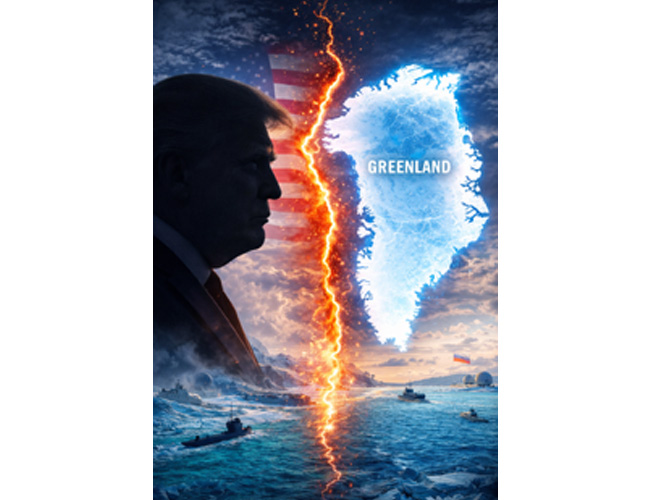
When Trump Spoke the Unthinkable
Donald Trump’s suggestion that the United States should “acquire” Greenland — first floated during his presidency and now resurfacing in political discourse — was initially laughed off as eccentric bravado.
But beneath the headlines and late-night jokes lay something far more serious: strategic intent.
Greenland is not just ice and isolation. It is:
-
A gateway to the Arctic
-
A launchpad between North America and Europe
-
Rich in rare earth minerals
-
Crucial to missile defence and satellite tracking
-
A frontline in the US–China–Russia power triangle
In short, Greenland is not for sale — but it is priceless.
Greenland Pushes Back — and So Does Europe
Greenland’s leaders, supported firmly by Denmark and the European Union, responded with clarity and defiance: sovereignty is not negotiable.
This was more than a diplomatic rebuke. It was a declaration that even the world’s most powerful nations are no longer free to redraw the map with chequebooks or bravado.
Behind closed doors, however, the tension was unmistakable.
The Arctic is warming faster than any other region on Earth — not just climatically, but geopolitically.
The Arctic: Cold War 2.0
What makes Greenland so dangerous is not Trump alone — it is timing.
The Arctic is rapidly becoming the next great theatre of competition:
-
Russia has militarised vast stretches of its Arctic coast
-
China calls itself a “near-Arctic state”
-
NATO is expanding its northern footprint
-
New shipping routes are emerging as ice retreats
Greenland sits at the crossroads of all of it.
Any miscalculation — political, military, or rhetorical — risks escalation far beyond the island itself.
Could This Really Lead to World War III?
Let’s be clear: Greenland will not start a world war.
But it could trigger one.
History shows that global conflicts rarely begin with dramatic declarations. They begin with misunderstandings, power plays, and wounded pride — especially when great powers test boundaries they assume will bend.
In a world already fractured by:
-
Wars in Europe and the Middle East
-
US–China rivalry
-
Economic nationalism
-
Climate-driven resource competition
…the Arctic represents a pressure point where lines are thin and consequences vast.
A Lesson the World Must Relearn
Greenland’s quiet resistance offers a powerful lesson:
Even small nations can draw firm lines — and force giants to pause.
This is not about Trump alone. It is about a world drifting back toward 19th-century thinking in a 21st-century reality.
Territory is no longer conquered by force alone — but neither is it immune from ambition.
The Ice Is Watching
Greenland remains calm. Measured. Unyielding.
But beneath the silence of its glaciers lies a truth the world ignores at its peril:
The next global crisis may not erupt in fire — but in ice.
And when it does, there may be no room left to laugh it off.