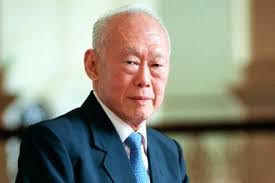
 26 February 2026

By Publisher Ray Carmen
There are world leaders. And then there are nation-builders.
When Singapore was expelled from Malaysia in 1965, it was a tearful moment broadcast to the world. A small island. No natural resources. High unemployment. Deep ethnic divisions. Few allies. Many doubters.
Into that uncertainty stepped Lee Kuan Yew — calm, clinical, unshakeable.
What followed was one of the most extraordinary national transformations in modern history.
From Survival to Supremacy

Educated at Cambridge and trained as a lawyer, Lee became Singapore’s first Prime Minister in 1959, holding office until 1990. His mission was simple but uncompromising: survival through excellence.
He understood that Singapore’s only real asset was its people.
So he built a system based on:
-
Ruthless anti-corruption enforcement
-
A meritocratic civil service
-
World-class education
-
Foreign investment attraction
-
Strategic global partnerships
The formula worked.
Within a generation, Singapore evolved from a struggling port city into a financial titan — home to one of the busiest shipping hubs in the world, a dominant aviation gateway, and one of Asia’s strongest currencies.
The skyline that now defines Marina Bay is not accidental. It is engineered.
Order Before Freedom
Lee was never sentimental about governance.
He believed social stability came before political liberalism. Strict laws, disciplined public conduct, tightly managed media — all were tools to ensure cohesion in a fragile, multi-ethnic society.
To critics, he was authoritarian.
To supporters, he was pragmatic.
To investors, he was predictable — and predictability builds wealth.
Singapore became synonymous with efficiency, safety, and integrity. Corruption was not tolerated. Bureaucracy functioned. Infrastructure worked.
In a region often marked by volatility, Singapore became the exception.
The Global Strategist

Lee Kuan Yew was also a master geopolitical thinker.
He maintained strong relations with the United States while building deep economic ties with China long before its meteoric rise. Leaders from East and West sought his counsel.
He believed small nations survive not by size — but by strategy.

Even after stepping down as Prime Minister, he remained influential as Senior Minister and later Minister Mentor, shaping Singapore’s long-term direction with calculated precision.
The Uncomfortable Question
Could Singapore have achieved its rise without Lee’s firm hand?
It is the debate that continues to shadow his legacy.
Civil liberties were constrained. Political opposition faced significant pressure. The Western liberal model was not his blueprint.
But the numbers are stark:
From developing nation to one of the highest GDP per capita countries in the world within decades.
Results that are difficult to ignore.
The Enduring Legacy

When Lee Kuan Yew passed away in 2015, the nation mourned with extraordinary reverence. Long queues formed as citizens paid their respects — not to a politician, but to the man many believed gave them a future.
Singapore today stands as a case study in disciplined ambition.
Clean streets. Strong currency. Global influence far beyond its physical size.
It is not merely a city-state.
It is a statement.
And behind that statement stands one architect.
Lee Kuan Yew.