 9 July 2026

By Publisher Ray Carmen
“The Cow is more of a mother to mankind than our own mothers.”
— Original Quote
For billions of people around the world, the cow is simply a farm animal.
For Hindus, however, the cow represents something infinitely greater.
She is a symbol of motherhood, compassion, generosity, prosperity, nourishment and life itself. Across India and wherever Hindu communities flourish, the cow has been honoured for thousands of years as one of civilisation’s most revered living beings.
To many outside Hinduism, this deep respect is often misunderstood.
Yet when one explores the history, philosophy and scriptures behind this tradition, a remarkable story unfolds—one that combines spirituality, ecology, agriculture, economics and ethics into one extraordinary symbol.
THE UNIVERSAL MOTHER
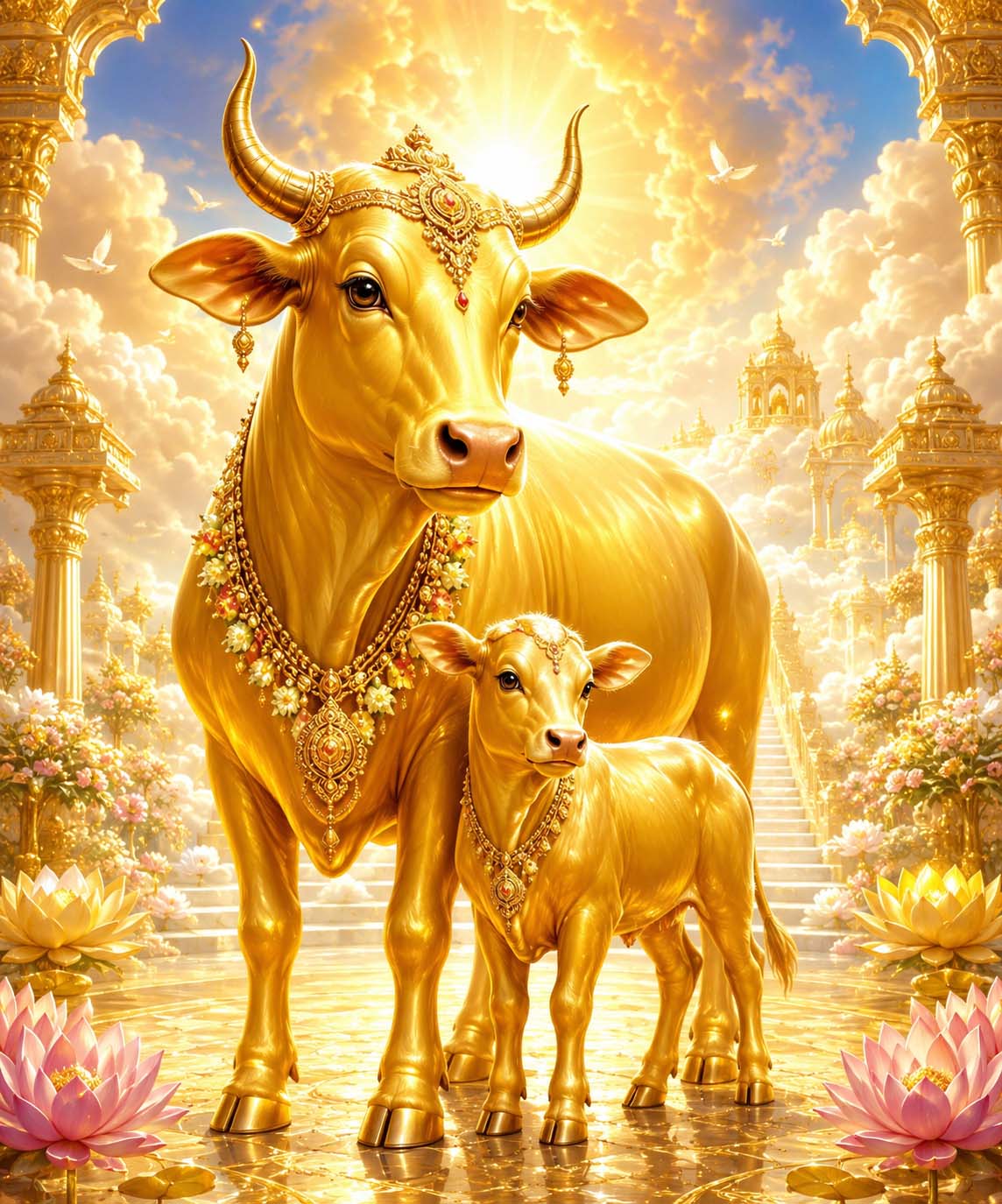
In Hindu tradition the cow is lovingly known as Gau Mata—Mother Cow.
Why “mother”?
Because, after a child has been weaned from its own mother, the cow continues to nourish humanity through her milk.
From milk come yoghurt, butter, curd, buttermilk and ghee—foods that have sustained generations for thousands of years.
In this understanding, the cow continues the nurturing role of motherhood throughout a person’s life.
She gives continuously while asking for almost nothing in return.
It is this spirit of selfless giving that lies at the heart of her sacred status.
THE DWELLING PLACE OF THE GODS
Ancient Hindu scriptures describe the cow not merely as an animal but as a sacred embodiment of divine creation.
Traditional belief holds that numerous deities symbolically reside within the cow’s body, expressing the idea that all aspects of creation are interconnected.
This symbolism reflects reverence for life itself rather than worship of the animal as a deity.
The divine wish-fulfilling cow, Kamadhenu, is described in Hindu tradition as the mother of all cows and a symbol of abundance, prosperity and generosity. She is often depicted as containing the presence of many gods within her form, representing the universe’s life-giving powers.
LORD KRISHNA AND THE COW
No deity is more closely associated with cows than Lord Krishna.
Raised among cowherds in Vrindavan, Krishna spent his youth tending cattle, playing his flute and protecting the herds.
His names—including Govinda (“Protector of Cows”) and Gopala (“Cowherd”)—reflect this intimate relationship.
His life teaches that leadership begins with compassion towards every living creature.
THE FOUNDATION OF CIVILISATION
Long before tractors and machinery, the cow and bull transformed human civilisation.
Bullocks ploughed fields.
They transported harvests.
They enabled farming communities to flourish.
Cow dung became natural fertiliser.
It also served as fuel in many rural communities.
These practical contributions helped sustain agricultural societies across the Indian subcontinent for centuries, reinforcing the cow’s role as a provider of life and prosperity.
SACRED GIFTS
In Hindu tradition every gift from the cow is considered valuable.
Milk nourishes.
Curd and yoghurt enrich daily diets.
Ghee is widely used in temple worship and sacred fire ceremonies.
Cow dung has long been valued as natural fertiliser and, in some communities, as a traditional fuel.
These uses reflect the belief that nothing given by the cow should be wasted.
THE PRINCIPLE OF AHIMSA
One of Hinduism’s highest ideals is Ahimsa—non-violence towards all living beings.
The cow became its greatest living symbol.
Protecting the gentle, harmless cow came to represent compassion, kindness and respect for life.
This philosophy profoundly influenced generations of spiritual teachers, including Mahatma Gandhi, who regarded cow protection as one of Hinduism’s most visible expressions of compassion.
FESTIVALS THAT HONOUR THE COW
Across India, numerous festivals celebrate the bond between people and cattle.
Among them are:
• Gopashtami, celebrating Lord Krishna as the divine cowherd.
• Govatsa Dwadashi, when cows and calves are honoured before Diwali.
• Mattu Pongal, part of the Pongal harvest festival in southern India, where cattle are decorated, blessed and thanked for their contribution to farming.
These celebrations express gratitude rather than ownership.
THE COW IN HINDU SCRIPTURES
References to cows appear throughout Hindu literature.
The Vedas praise cattle as sources of prosperity.
The Mahabharata recounts the story of the divine cow Kamadhenu and her daughter Nandini.
The Bhagavata Purana celebrates Krishna’s childhood among cows.
Together these texts present the cow as a symbol of abundance, duty, generosity and harmony between humanity and nature.
MORE THAN RELIGION
To understand the sacred cow is to understand an entire worldview.
It is a civilisation that sees gratitude where others may see utility.
That honours nurturing over consumption.
That teaches respect before exploitation.
Whether one shares the Hindu faith or not, the philosophy behind the sacred cow offers a powerful reminder:
The measure of a civilisation is often found in how it treats the gentle, the vulnerable and those who sustain life.
In an age searching for sustainability, compassion and balance with nature, the ancient reverence for the cow continues to speak across cultures and across centuries.
Perhaps that is why this remarkable animal has never simply been viewed as livestock.
She has always been something much greater.
She has been remembered as a mother.