 9 July 2026

By Publisher Ray Carmen
Few political decisions in modern British history have generated as much debate as Brexit. Since the United Kingdom voted to leave the European Union in June 2016, politicians, economists, businesses and ordinary citizens have continued to argue over one central question:
Has Brexit delivered what Britain hoped for?
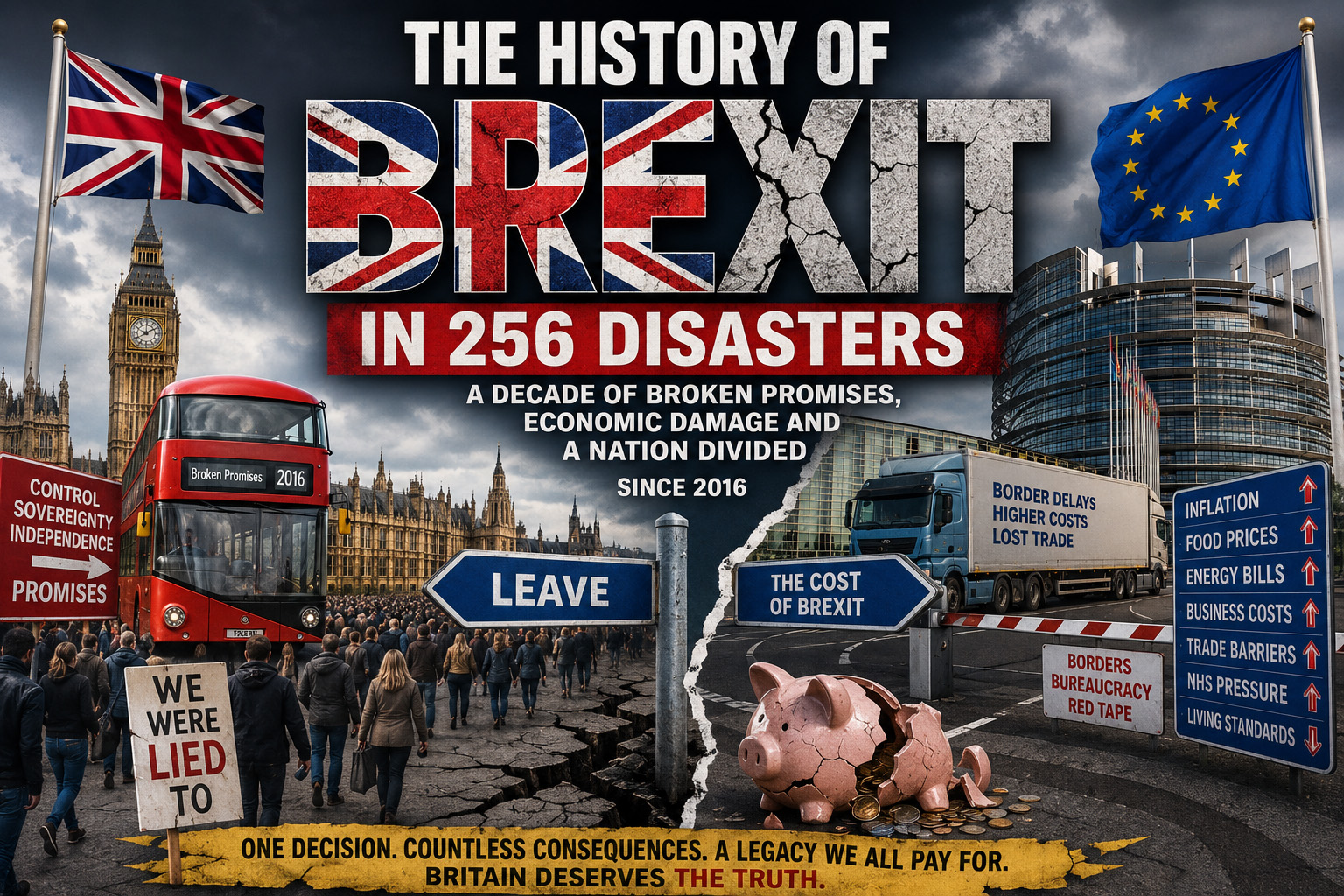
A new publication, The History of Brexit in 256 Disasters, argues that the years following the referendum have been marked by a succession of political, economic and administrative setbacks. Its authors present Brexit not as a single event, but as a chain of challenges that have reshaped Britain’s relationship with Europe and the wider world.
Among the issues most frequently discussed are slower economic growth compared with many forecasts before the referendum, increased barriers to trade with European markets, labour shortages in sectors such as agriculture, hospitality and health care, additional costs for exporters and importers, and greater complexity for businesses operating across borders. Many companies have also spoken about increased paperwork, customs procedures and regulatory requirements that did not previously exist.
The City of London, once regarded as Europe’s undisputed financial capital, has also experienced changes, with some financial activity and investment shifting to other European centres. Universities have adapted to changes in research partnerships and student exchange programmes, while exporters have had to navigate a new trading environment.
Supporters of Brexit, however, maintain that the United Kingdom has regained greater control over its laws, borders, fisheries and trade policy. They argue that leaving the European Union gives Britain the freedom to negotiate its own international agreements and shape domestic legislation independently. They also contend that many of Brexit’s long-term benefits will become clearer over time.
Nearly ten years after the referendum, public opinion remains divided. Some believe Brexit restored national sovereignty and democratic control. Others believe the economic costs have outweighed the political gains. Polls have shown opinions evolving over time, but the debate continues to be one of the defining issues of modern British politics.
Whatever one’s political position, Brexit has undoubtedly altered Britain’s place in Europe and the world. It has influenced trade, investment, immigration, diplomacy and the daily lives of millions of people.
History will ultimately decide whether Brexit is remembered as an act of national renewal or one of the most consequential political miscalculations of the twenty-first century. For now, it remains one of the most closely examined decisions in modern British history—one that will continue to shape debate for generations to come.