 9 July 2026

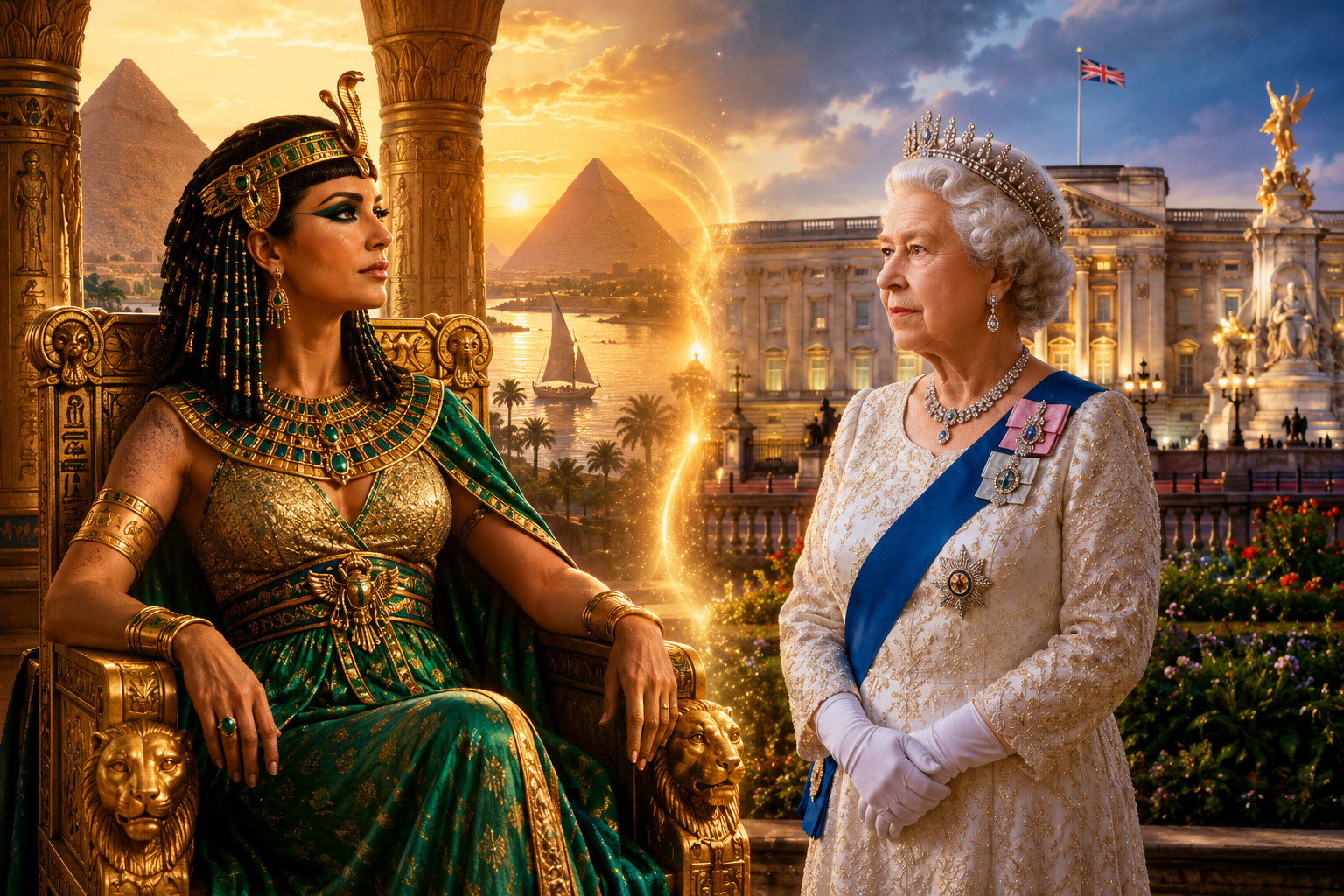
Cleopatra & Queen Elizabeth II : Two Women Who Defined Their Ages
By Publisher Ray Carmen
History has produced countless kings and queens.
Yet only a handful have become truly timeless.
Separated by more than two millennia, Cleopatra VII Philopator and Elizabeth II stand among the most recognised women ever to wear a crown.
They ruled different nations, spoke different languages and lived in completely different worlds. Yet both became symbols of their countries and left legacies that continue to inspire millions.
Cleopatra inherited an Egypt under immense pressure as the Roman Republic expanded its influence across the Mediterranean. Intelligent, multilingual and politically astute, she used diplomacy, leadership and strategic alliances in an effort to preserve her kingdom’s independence. She was a ruler who made decisions that directly shaped the future of her nation.
Queen Elizabeth II came to the throne in 1952 and reigned for an extraordinary seventy years. Unlike Cleopatra, she was a constitutional monarch whose role was not to govern but to serve, advise and represent. Throughout decades of profound global change, she became a symbol of stability, dignity and continuity for the United Kingdom and the wider Commonwealth.
Both women possessed remarkable qualities.
Both understood the importance of leadership.
Both inspired loyalty.
Both became internationally recognised figures whose influence extended far beyond their own borders.
Each also demonstrated resilience during periods of immense uncertainty. Cleopatra faced military and political threats that would determine the survival of her kingdom, while Elizabeth II guided the monarchy through wars, social transformation, constitutional change and an era of unprecedented technological progress.
Their styles of leadership could hardly have been more different.
Cleopatra ruled with executive authority in one of history’s great ancient civilisations.
Elizabeth II reigned through quiet service, constitutional restraint and an unwavering commitment to duty.
Yet history remembers both because they represented something greater than themselves.
One became the last Queen of Ancient Egypt.
The other became Britain’s longest-reigning monarch.
More than 2,000 years separate their lives, but both remain enduring symbols of leadership, resilience and national identity.
History often celebrates great kings.
These two extraordinary queens proved that women could leave an equally powerful mark upon the world.
Their crowns belonged to different ages.
Their legacies belong to history forever.